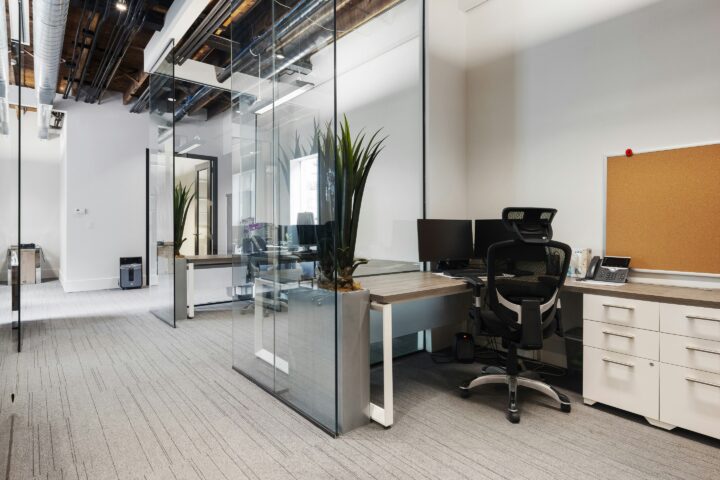
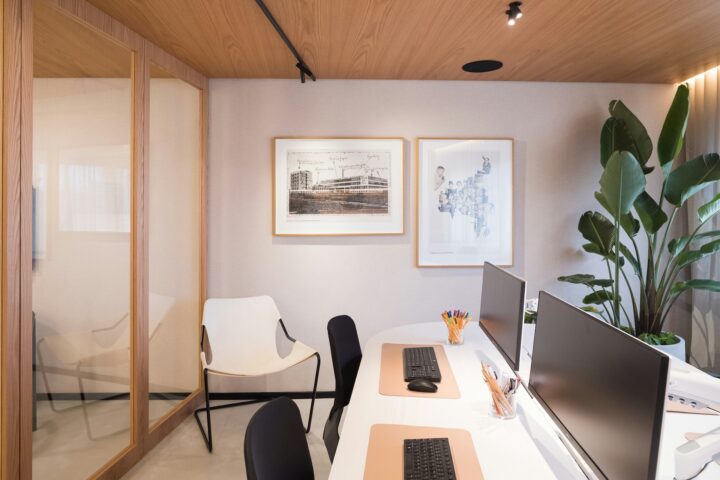
Start with your needs, not advertisements.
Before opening any listing, consider these questions: How many people will work simultaneously in the space? Are separate rooms required or is open plan sufficient? Will clients visit the premises? Are there special requirements such as goods delivery, high ceilings, or special electrical installations?
For office use, a general guideline is approximately 10 square metres per person, but this varies greatly depending on work methods. A hybrid work environment, where not everyone is present simultaneously, can function in a more compact space. In addition to workstations, meeting rooms, a kitchen, and storage space are required.
Consider also the situation in three years. If the company grows, would you need to relocate again soon? Flexibility is a valuable feature in a lease agreement, even if it is not immediately apparent.
The location is a compromise.
A perfect location with good public transport links, sufficient parking spaces, a suitable price and the right neighbourhood is rare. Usually something must be prioritised and something else compromised.
A practical approach to considering location is to think about who will be using the space. If there is heavy customer footfall, accessibility is key. If the space is purely a workplace for staff, it can be further from the city centre as long as public transport links are good. It is also wise to consider recruitment aspects: the best office space in a prime location attracts job seekers more than cheaper premises in an industrial area.
What to look for during a viewing
Photographs can be misleading in both directions. The space may appear smaller than it is, or a composed photo may conceal a low ceiling or a dark corner. When visiting, pay attention to natural light, acoustics, ventilation, and how the space feels when you stand in it.
Please also inquire about potential alterations to the space and who would be responsible for them. A space that is not suitable as is may be transformed into the perfect one with modifications. Conversely, a space that appears ready may contain restrictions that are not immediately apparent.
The contract is more important than the price per square metre.
Commercial lease agreements typically bind tenants for multiple years. Therefore, it is important to study the contract terms as carefully as the premises themselves. Key points include the contract length and termination period, the division of responsibility for alterations and repairs, the method of index increases, and any rent-free months.
There is more room for negotiation than many expect. The current market conditions are favourable to tenants, and in many cases, owners are willing to be flexible with terms to secure a good tenant.